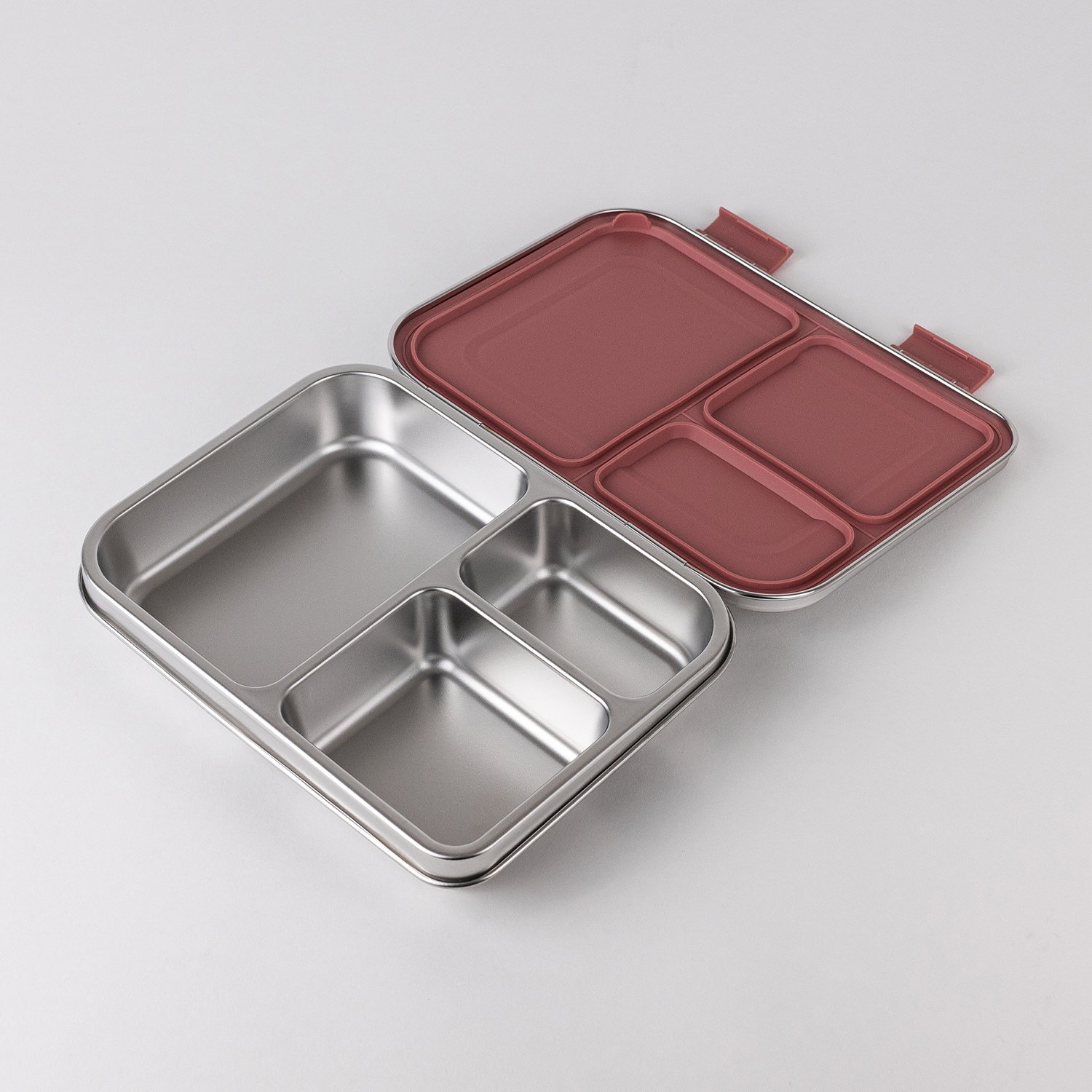
A stainless steel lunch box is relatively easy to keep clean. For everyday cleaning, warm water and regular dishwashing liquid are usually sufficient, and many stainless steel lunch boxes can also be washed in the dishwasher.
If your lunch box has silicone seals or removable inserts, these should be removed periodically and cleaned separately. The most important thing is to allow all parts to dry completely before closing and storing the lunch box. This guide covers how to clean stainless steel lunch boxes, remove stains, and deal with rust.
How do you clean a stainless steel lunch box?
After use, remove any food residue and wash the lunch box with warm water and dishwashing liquid. Use a soft brush, sponge, or cloth to avoid unnecessary scratches on the surface. Pay particular attention to corners, joints, and the area around the lid, where food residue can accumulate more easily.
If the lunch box has removable silicone seals or inserts, it is a good idea to take them out regularly and wash both the silicone and the area underneath. Allow all parts to dry completely before reassembling the lunch box.
Can a stainless steel lunch box go in the dishwasher?
This depends on the specific lunch box and its lid, seals, and other components.
SteelMate's lunch boxes are dishwasher-safe when cleaned according to the product's care instructions. On models with a removable silicone insert, the insert can be taken out so that both the lid and the silicone can be cleaned thoroughly. Even if you normally use the dishwasher, it is still a good idea to take apart removable components from time to time.
Why do stains appear on stainless steel?
Stains on stainless steel are not necessarily rust. White or dull marks may be caused by limescale and minerals in the water, while darker or rust-coloured marks may come from food residue or foreign metal particles.
Small rust-coloured spots can sometimes be caused by flash rust. This occurs when iron particles from other metal objects settle on the surface and begin to oxidise. Always start by cleaning the stain before deciding whether the stainless steel itself has been damaged.
Can stainless steel rust?
Stainless steel is highly resistant to corrosion, but it is not completely immune to it.
The chromium content forms a protective layer on the surface, making stainless steel much more corrosion-resistant than ordinary steel. However, the surface can still be affected by foreign iron particles, prolonged exposure to moisture, or aggressive cleaning agents. If you notice a rust-coloured stain, clean it first. If actual corrosion occurs or the problem keeps returning, the lunch box should be examined more closely.
What should you avoid when cleaning?
Stainless steel is durable, but very aggressive cleaning methods are rarely necessary.
- Avoid coarse steel wool pads and harsh abrasives, which can scratch the surface or introduce foreign metal particles.
- Strong chlorine-based cleaning agents should also be avoided unless the manufacturer specifically states otherwise. For everyday maintenance, gentle cleaning is almost always the best starting point.
Scratches and signs of wear on a stainless steel lunch box
A stainless steel lunch box used every day may develop scratches, small marks, and a patina over time. These are normal cosmetic signs of wear and do not, in themselves, mean that the lunch box is damaged. It is more important to check whether the lunch box still closes properly, whether the seals are intact, and whether any actual deformation or corrosion has occurred.
Frequently asked questions
Should the silicone seal be removed during cleaning?
Yes, if it is removable. This makes it easier to clean both the seal and the area underneath it.
Why are there white spots on my stainless steel lunch box?
These are often caused by limescale or minerals in the water and do not necessarily indicate damage to the stainless steel.
Should the lunch box dry with the lid open?
Yes. It is a good idea to allow all parts to dry completely before closing and storing the lunch box.
In summary
A stainless steel lunch box does not require special maintenance. Wash it after use, clean removable seals regularly, and allow all parts to dry completely. Stains and minor scratches are not automatically signs of damage. If you notice rust-coloured marks, first try gentle, regular cleaning and then inspect the surface again.